
A century open
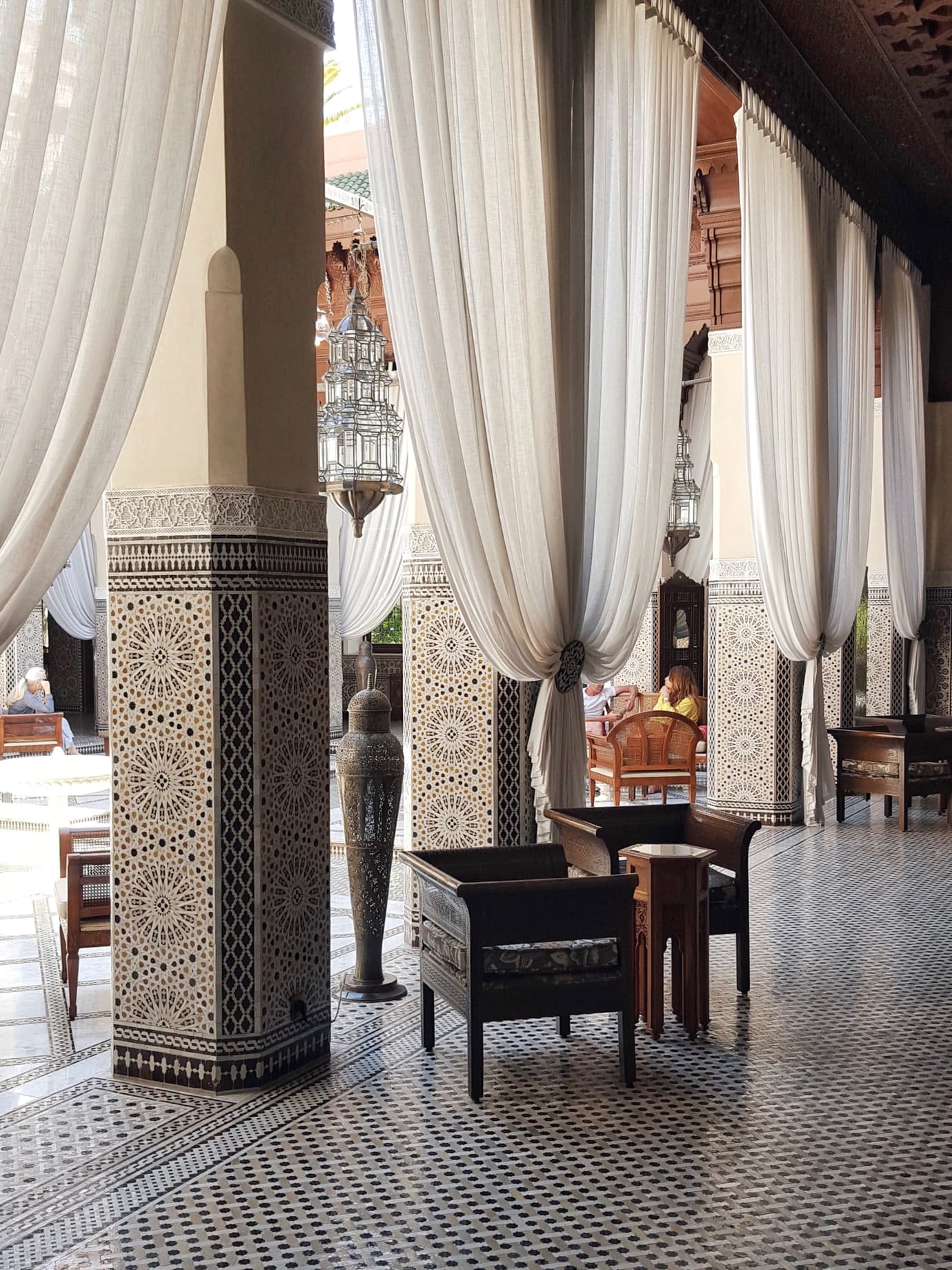
La Mamounia opened in 1923 and is still the hotel everyone has heard of before they reach Marrakech. It stands on avenue Bab Jdid, against the medina wall — which is the part that tends to surprise people: you can walk into the old city, and yet the hotel is a world apart the moment you step inside.
What follows is what is actually there, with names and figures from its own listing. The "unforgettable experience" part is yours to judge.
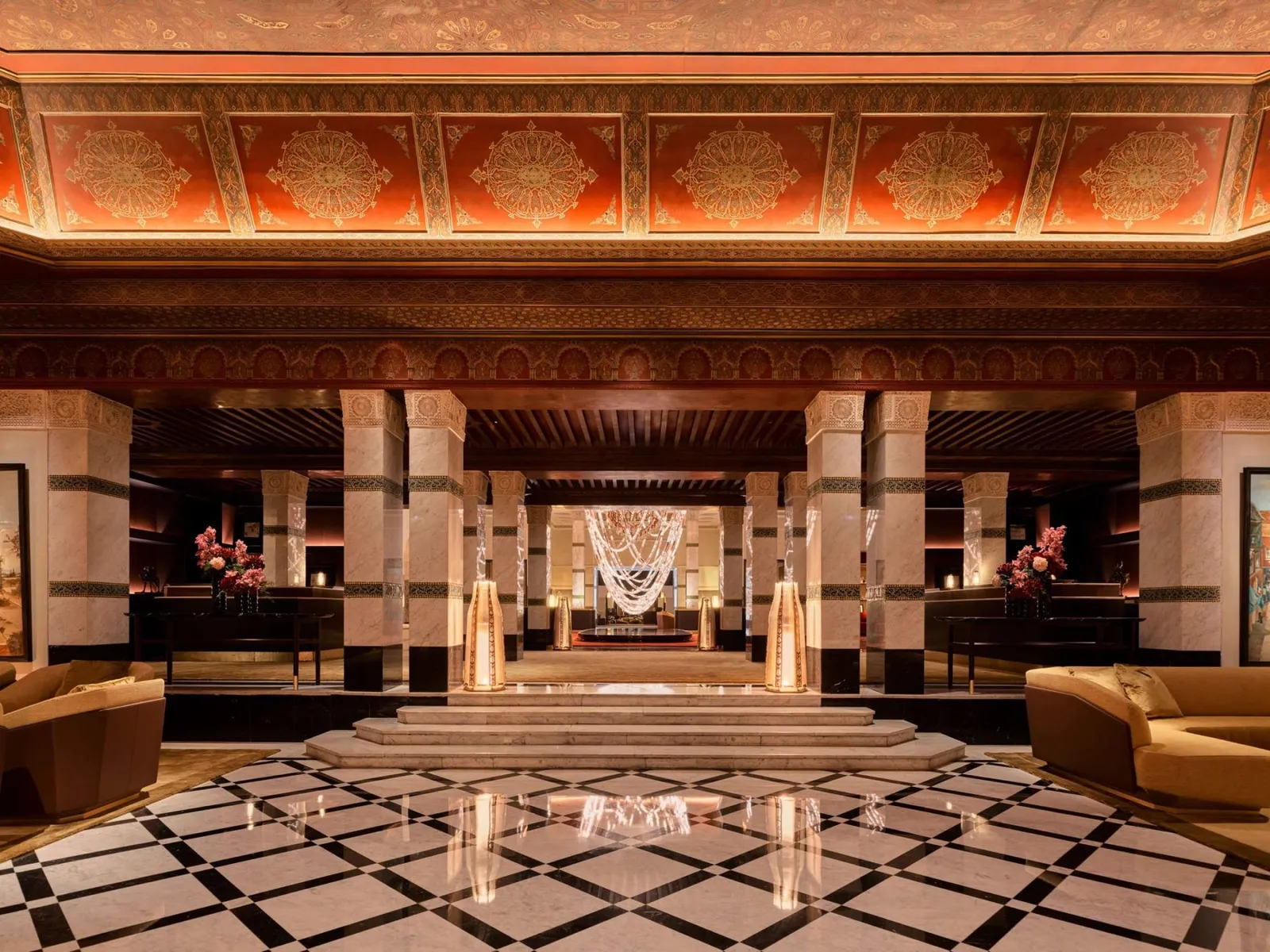
The size of the house
Around 800 people work at the hotel. You stay in rooms, suites, the so-called Exceptional Suites, and separate riads inside the grounds, for anyone who wants a house rather than a room.
Where you eat
Four restaurants, three of them signed by a chef:
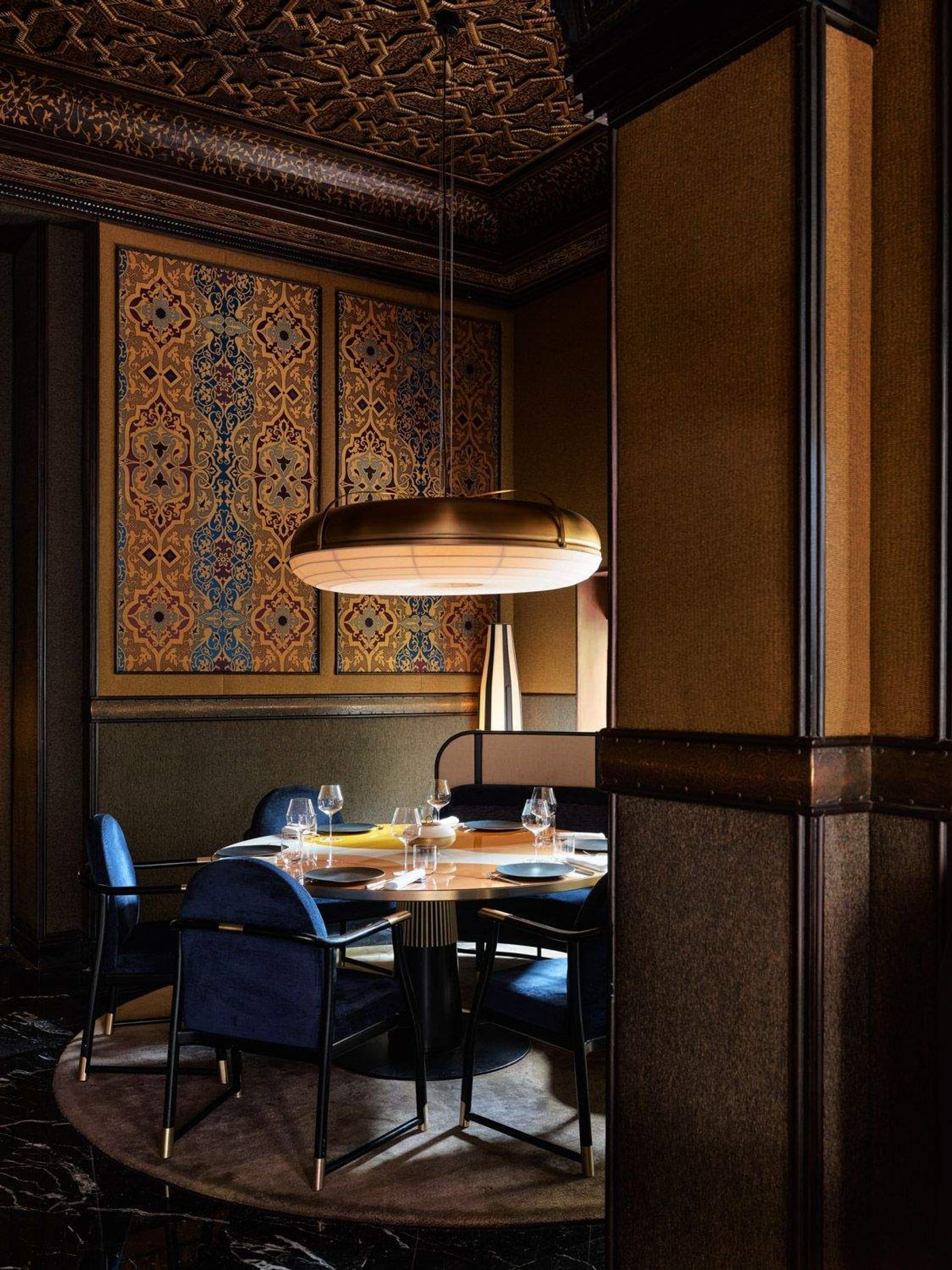
L'Asiatique par Jean-Georges
The menu is by Jean-Georges Vongerichten. It is the darkest and quietest room in the house, low-lit and screened: the one you book for dinner for two, not for a passing lunch.
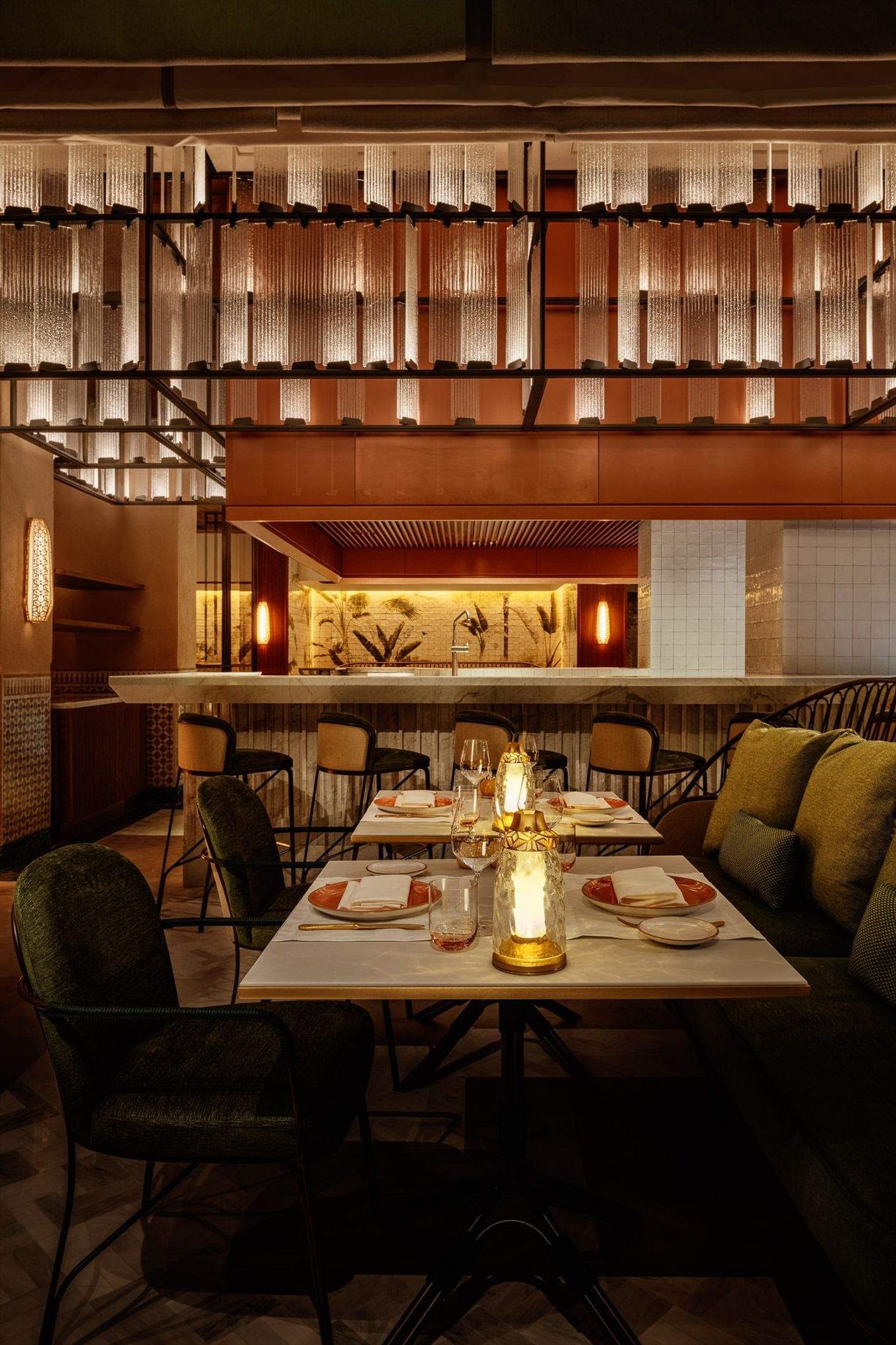
L'Italien par Simone Zanoni
By Simone Zanoni. Open kitchen and terracotta tones, livelier than the rest. It is the one that works best with a group or with children.
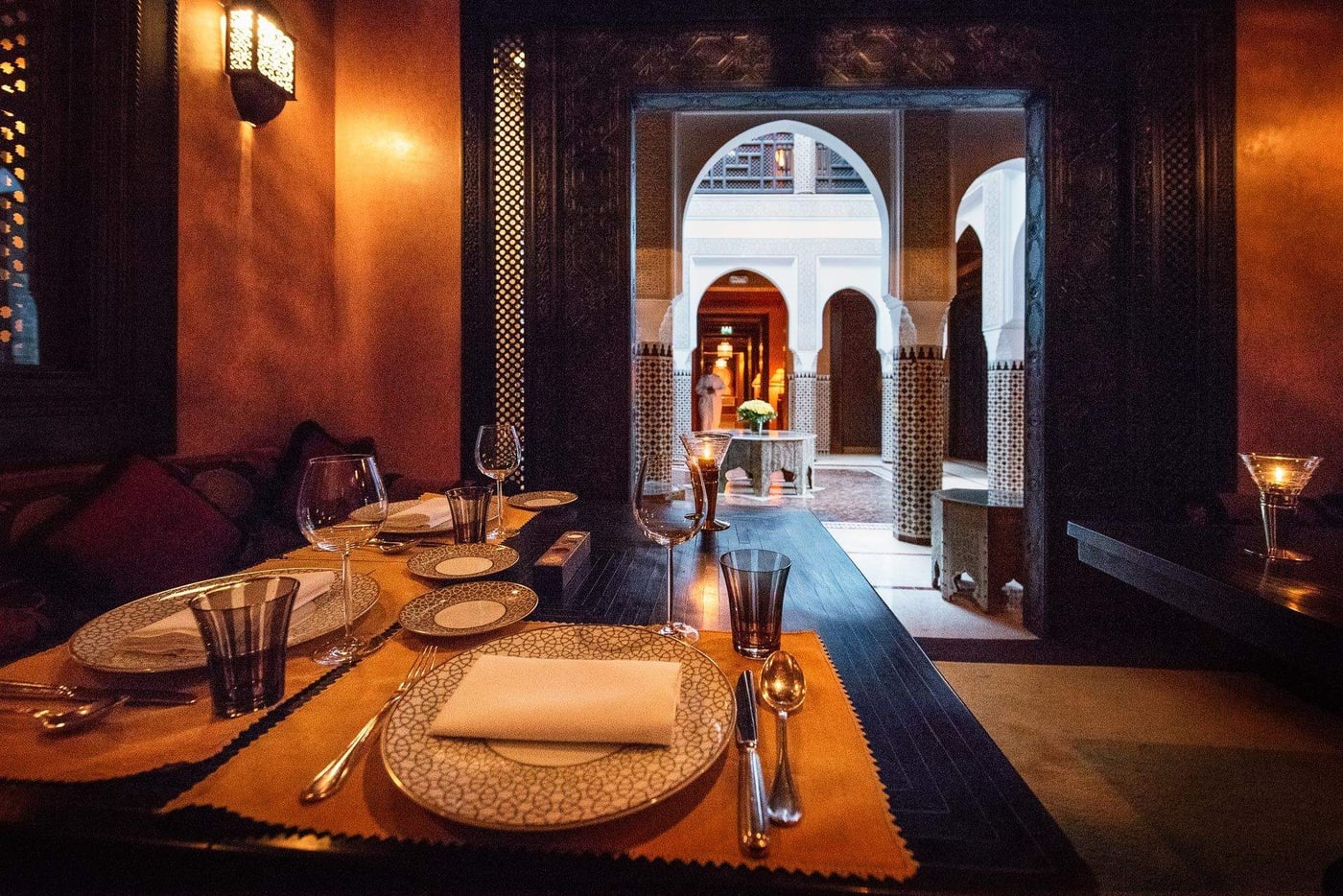
Le Marocain
The house's Moroccan kitchen, with chef Rachid Agouray. You eat in an arched room opening onto a lit courtyard, inside the garden. If you only dine at the hotel once, dine here — it is the only one of the four you could not repeat in another city in the world.
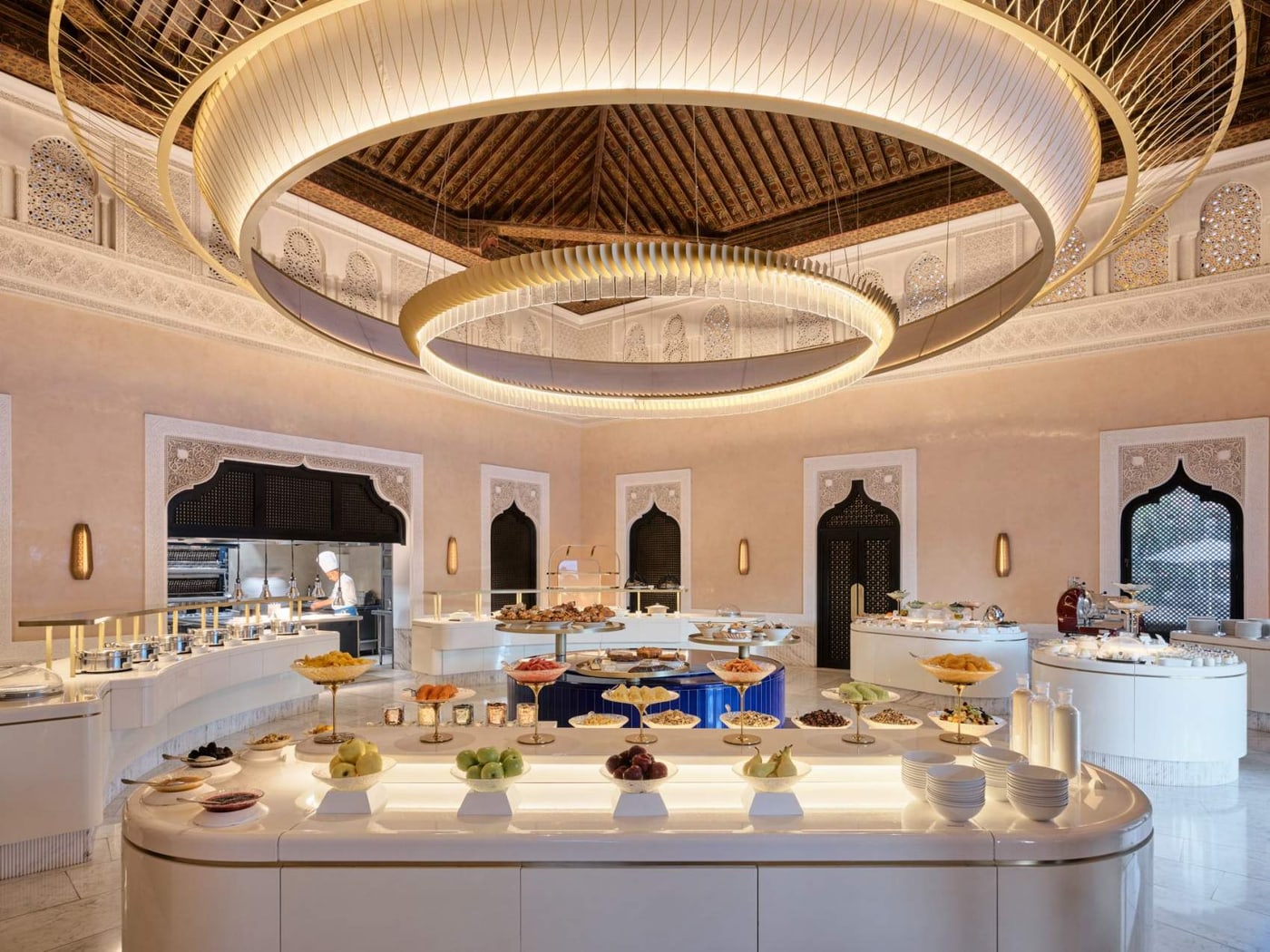
Le Pavillon de la Piscine
The poolside one, for breakfast and lunch. White, high-ceilinged, with an enormous circular light overhead. It is the most informal, and the one guests use day to day.
And four bars: Le Bar Majorelle, Le Club, Le Bar de la Piscine and Le Churchill, named after the guest who made it famous.
The pastry
Both tea rooms — Le Menzeh and Le Salon de Thé — are by Pierre Hermé. It is by far the cheapest way to set foot in the hotel: you can come for afternoon tea without staying, and for many people that is the perfect Marrakech afternoon.
The gardens
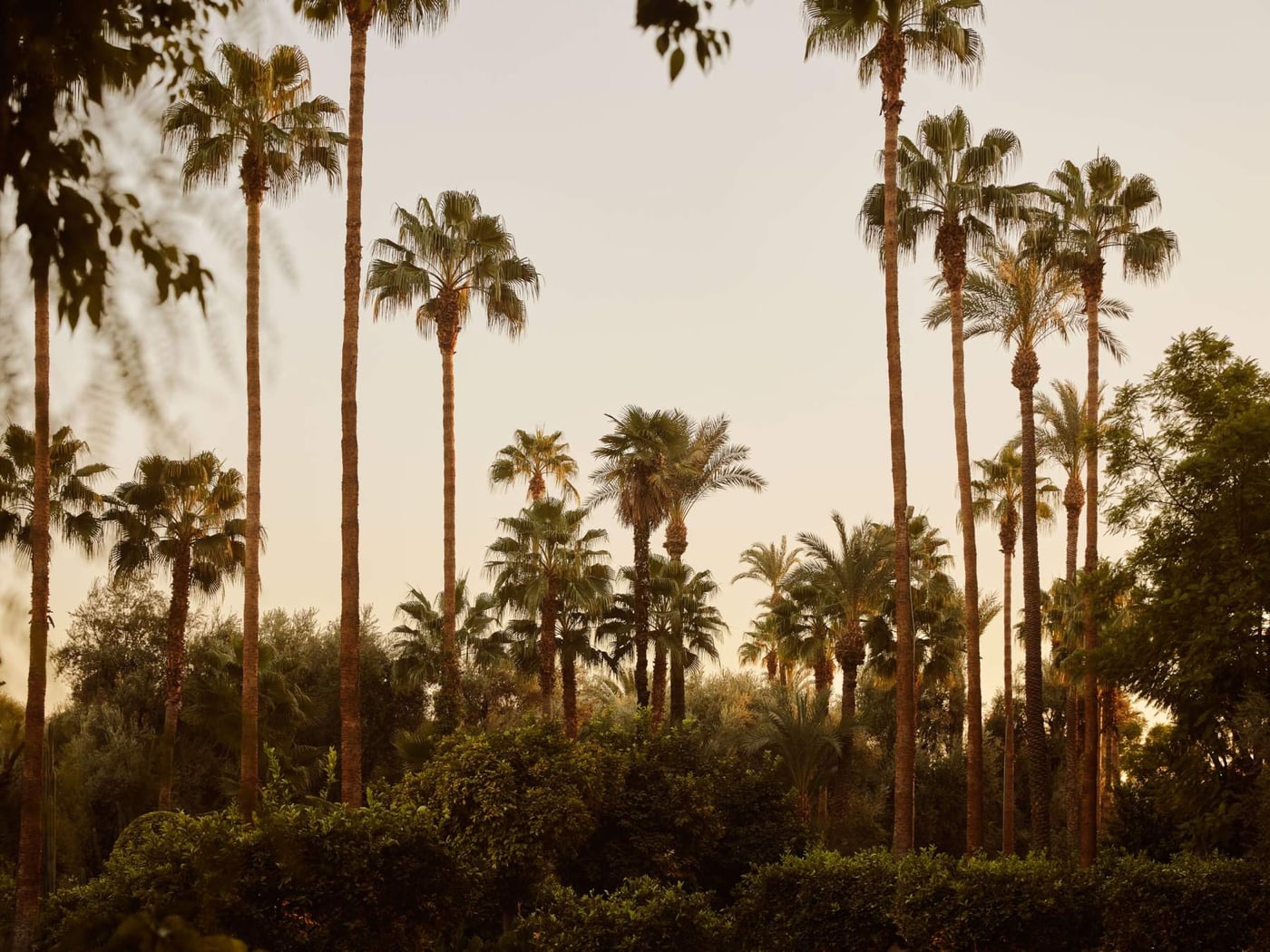
The palm grove
It is what you see on looking up from anywhere in the garden, and what explains how a hotel pressed against the medina wall can feel miles from the noise.
They are the reason the hotel is what it is: roses, orange trees, olive trees and palms, with pools indoors and out, tennis courts and a vintage games room. There is also a cinema and a wine cellar, L'Œnothèque.
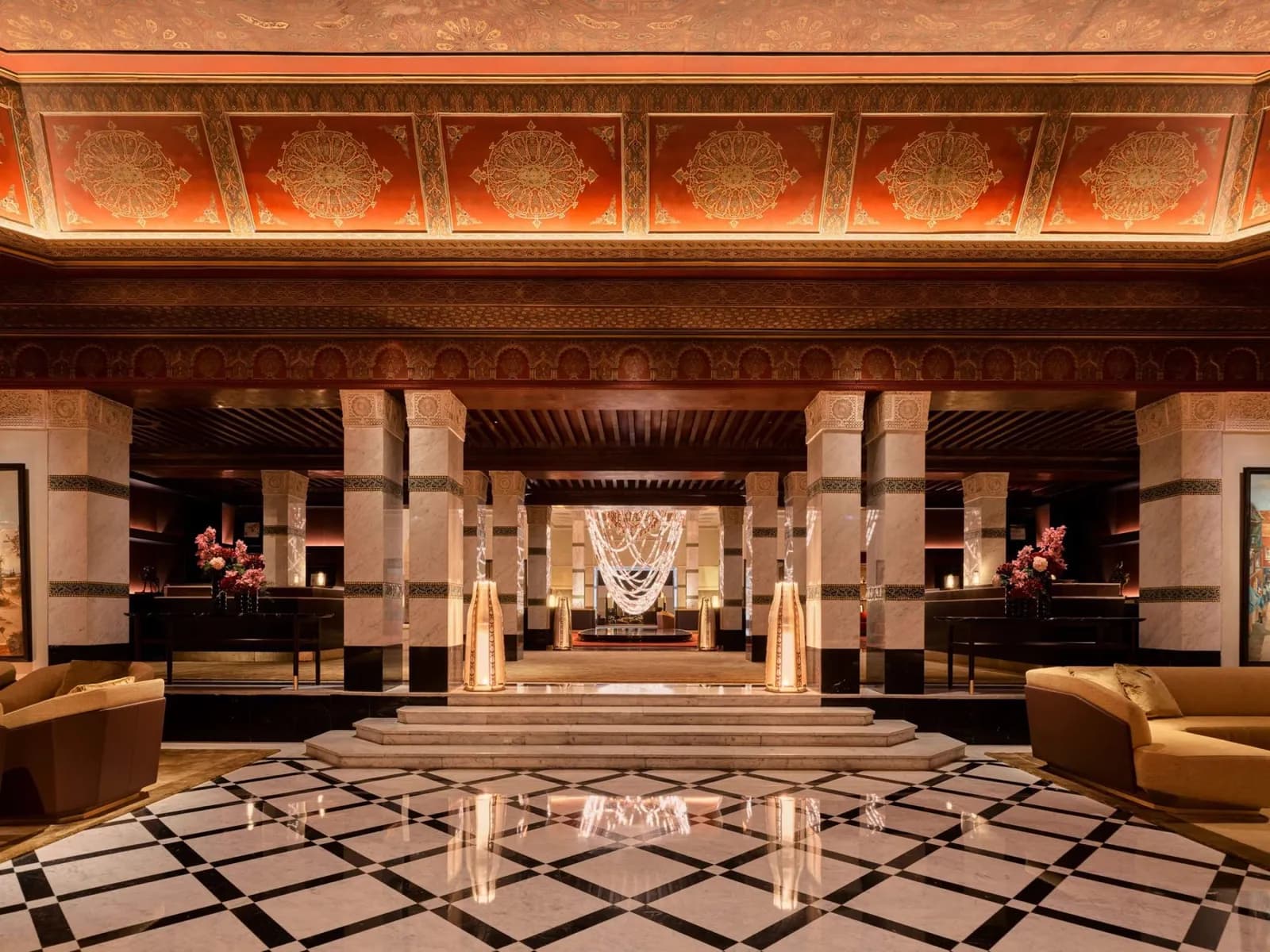
During the refurbishment carried out between 2020 and 2023 they installed the so-called Centenary Chandelier, the first thing you see on walking in.
The spa
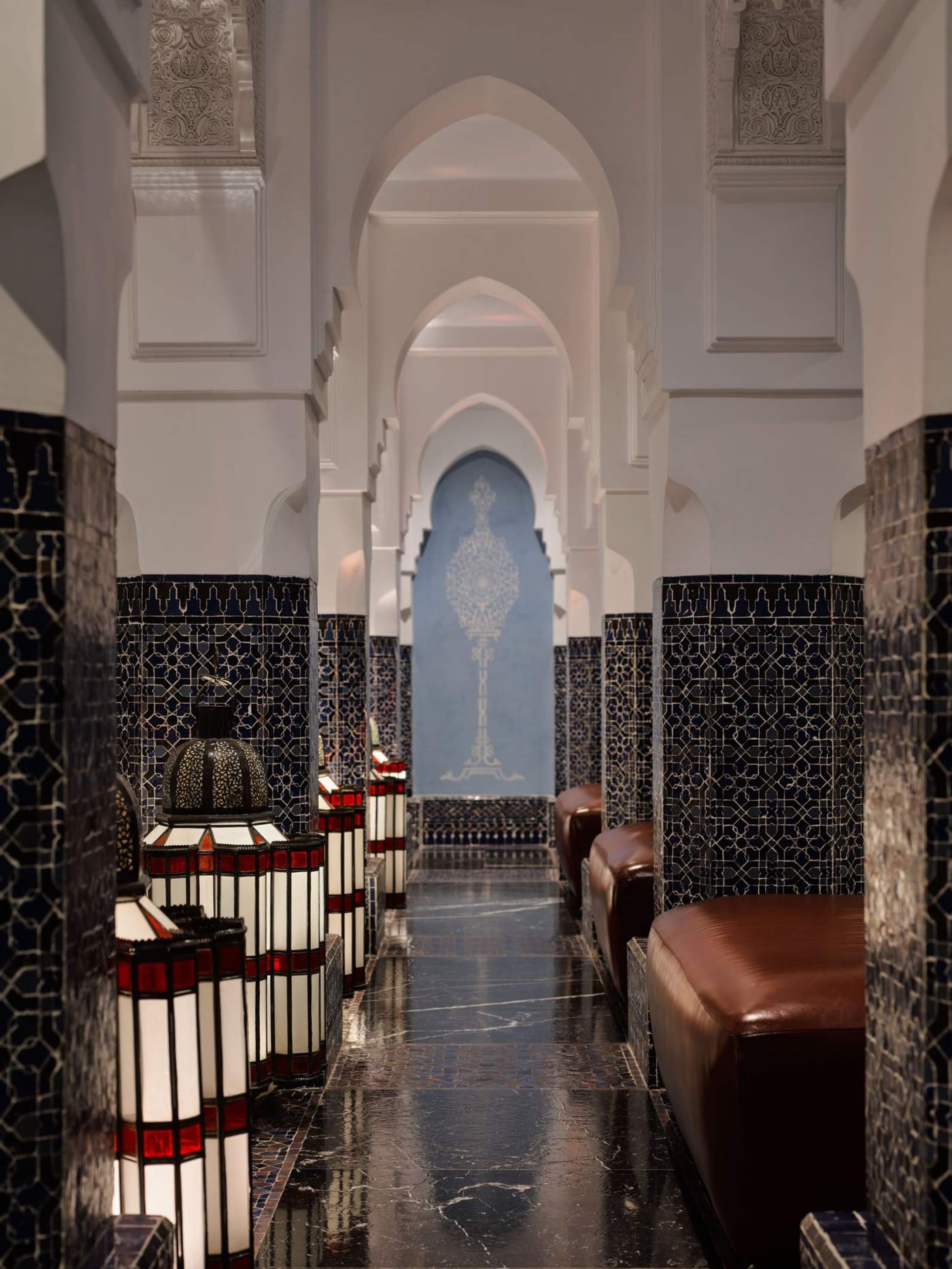
The indoor pool
Arches, dark mosaic and water in half-light. It is the part of the hotel that most surprises anyone who walks in expecting a gym with a pool.
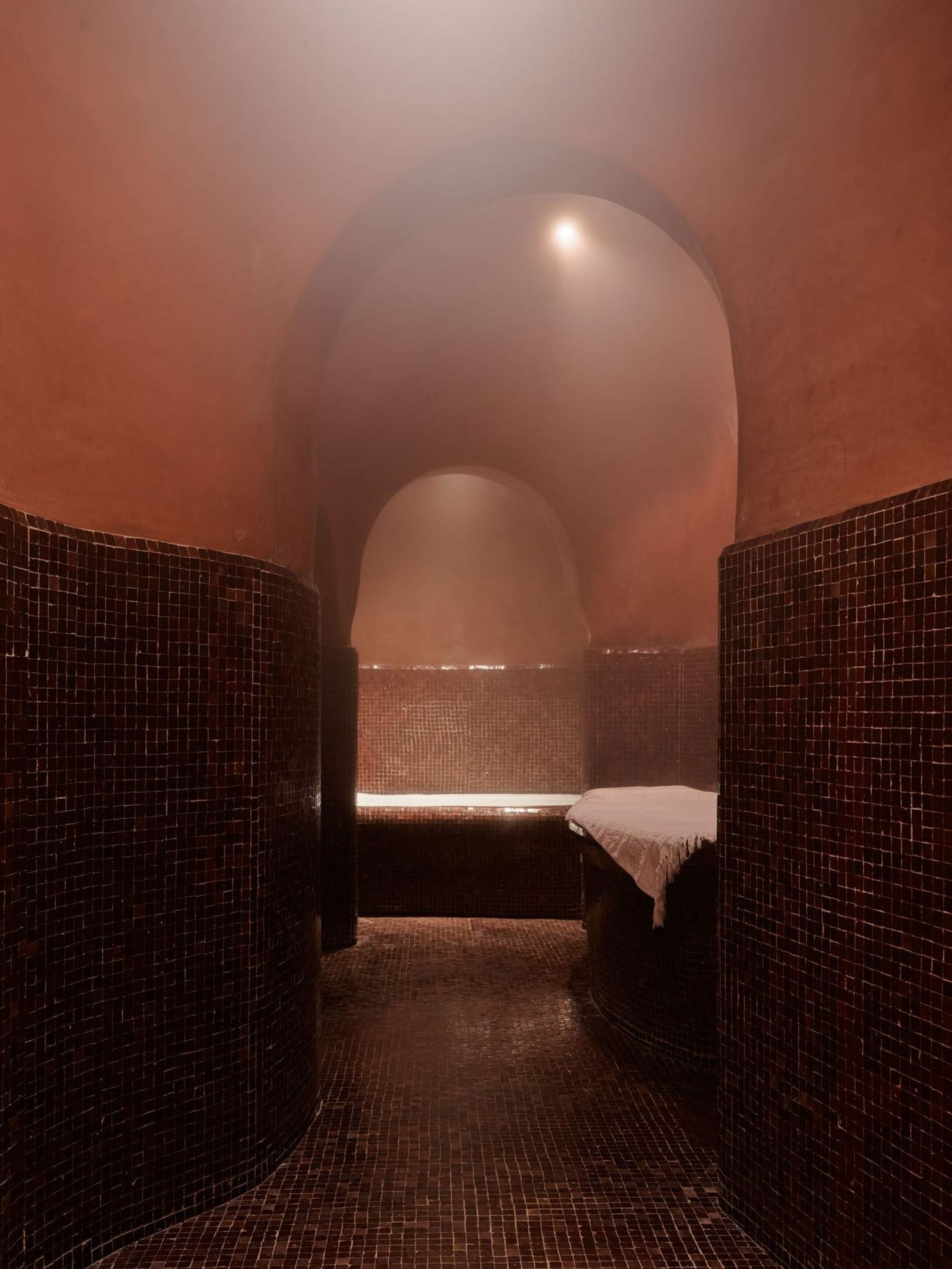
The hammam
The traditional Moroccan bath, in a private room. If this is your first time in Morocco, do it here before trying a public one: you will understand better what is going on.
Massages, hammams, treatments, a hair and beauty salon, and sports facilities. The hotel does not publish a floor area, so we are not going to invent one: the honest comparison is that the spa at the Royal Mansour does state 2,500 m² over three floors, and that is the other name it is always measured against.
Recognition
At the 2026 World's Best Awards from Travel + Leisure it was named best city hotel in North Africa and the Middle East.
Is it worth it?
Our view, after years of booking it: yes, for at least one night, and better at the start or the end of the trip. In the middle of a desert route you get little out of it — you arrive at night, leave early, and pay for a hotel you never see.
If the whole trip is going to be in this bracket, have a look at our luxury trips. And if you are comparing hotels, Morocco's most exclusive hotels lists them all by region.