
The medina: a living labyrinth
The Marrakech medina has been a UNESCO World Heritage Site since 1985. It's a labyrinth of narrow alleys where souks, mosques, palaces, fondouks and traditional houses all blend together. The best thing you can do is get lost: don't try to follow a map, just let yourself drift.
The essential souks
- Souk Semmarine: the most famous, full of fabrics, leather and lamps.
- Souk des Teinturiers: the dyers' souk, with skeins of wool hanging dyed in bright colours.
- Souk Haddadine: the blacksmiths' souk, where you'll see lamps being hammered into shape.
- Souk Cherratin: specialists in leather and handmade babouches.
Haggling: the Moroccan art
In the souks almost nothing has a fixed price. Always ask, and bring it down to at least a third of the starting price. It's a ritual, not a fight: do it with a smile and a glass of mint tea between you.
Jemaa el-Fna: the crazy heart
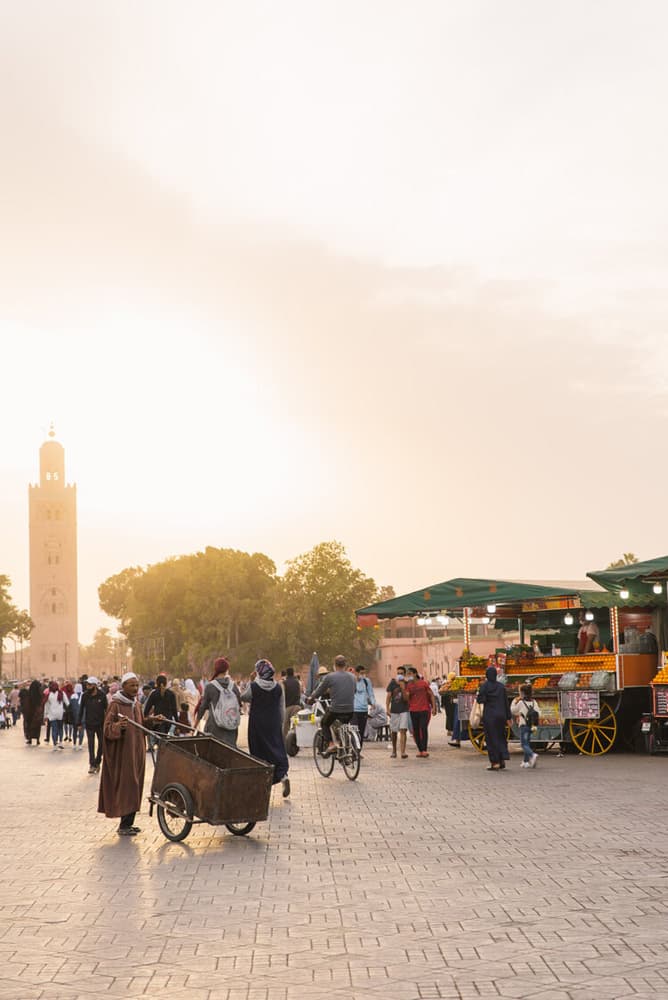
By day it's a large square with stalls of freshly squeezed orange juice (try one!), snake charmers and trained monkeys (better not to go near — better for the animals too).
At sunset the square transforms: out come the food stalls (lamb, skewers, snails, soups), the gnaoua musicians, the storytellers and acrobats. It's a spectacle declared Intangible Heritage of Humanity.
The essential sights
- Bahia Palace (19th century): the most beautiful palace in the city, with tiled courtyards, fountains and zellige.
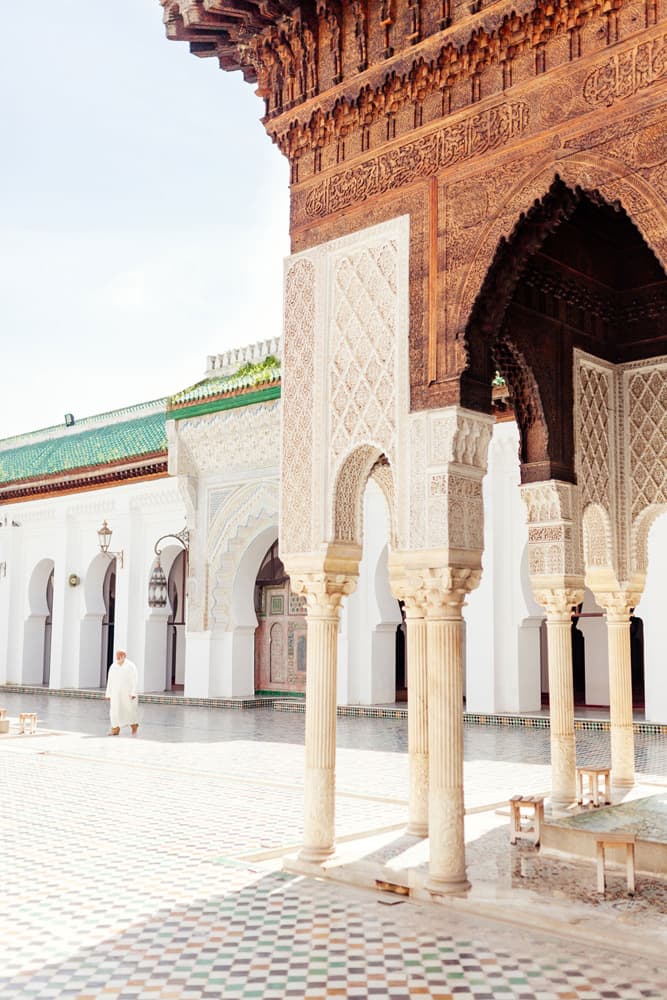
- Ben Youssef Madrasa: a former Quranic school with one of the most photographed courtyards in Morocco.
- Saadian Tombs: rediscovered in 1917, with Carrara marble mausoleums.
- Koutoubia Mosque: the tallest minaret in the city, twin brother of the Giralda in Seville.
- Majorelle Gardens: the famous garden of Yves Saint Laurent. A must for cactus lovers.
Where to stay
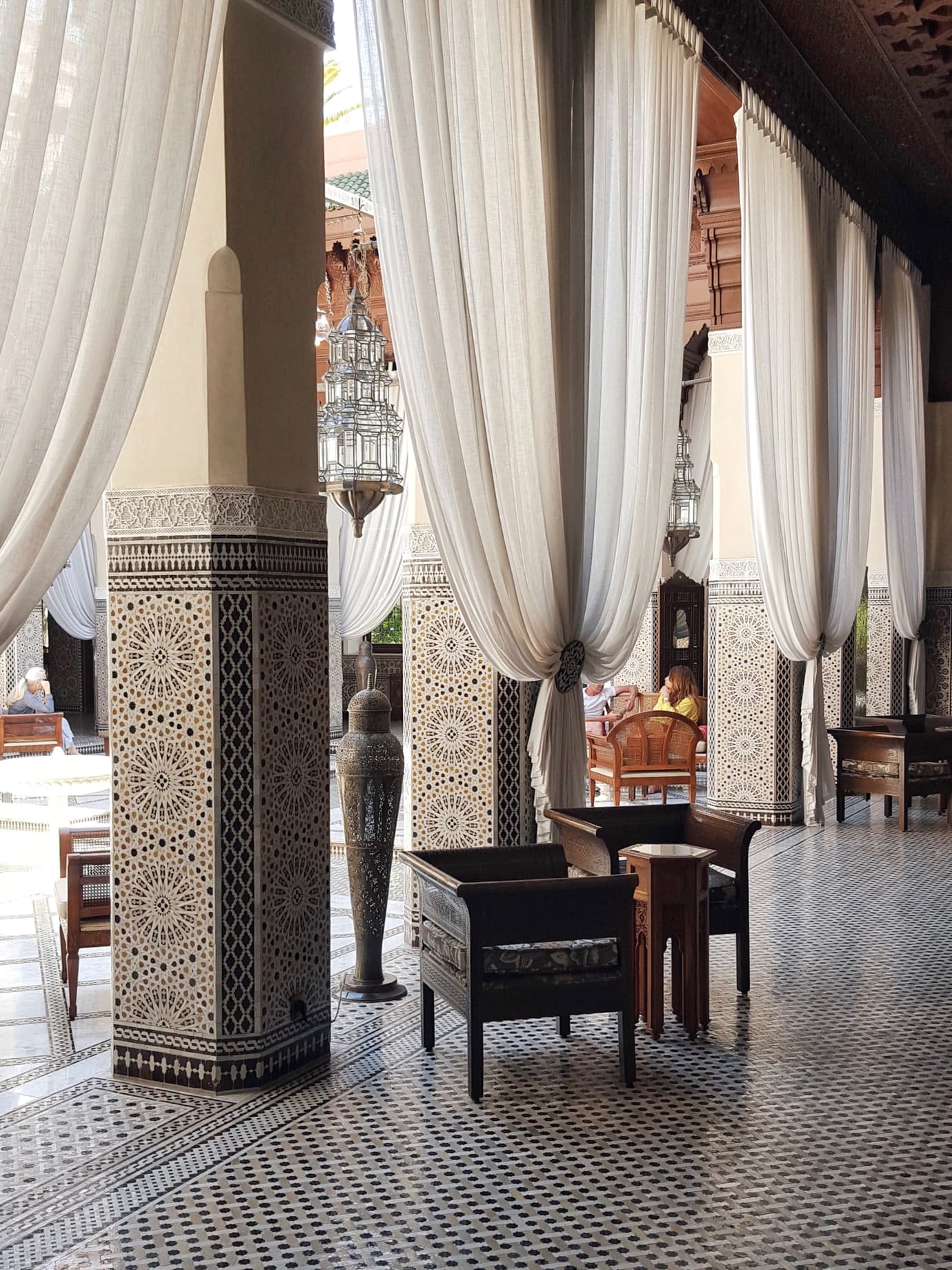
We recommend a riad inside the medina — these are traditional houses with an interior courtyard, fountain and terrace. From the outside they look like nothing; inside they are silent palaces in the middle of the chaos.